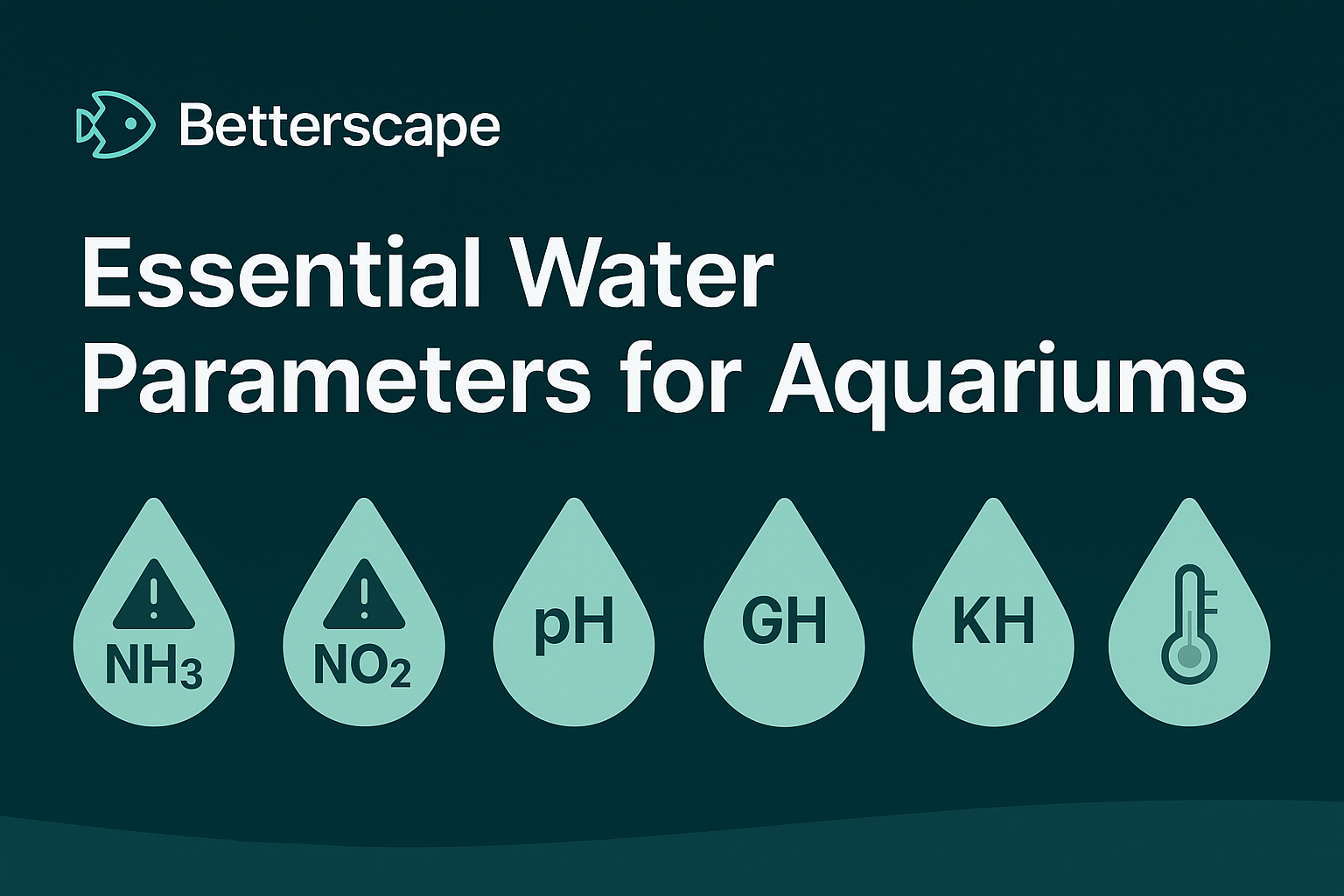
What Are the Essential Water Parameters I Need to Monitor?
Maintaining stable water parameters is one of the most important aspects of fish keeping. Unlike in the wild, where water volume buffers changes, aquariums are closed systems—meaning small imbalances can quickly become serious problems. Regular testing is the key to keeping your aquatic pets healthy and thriving.
Pro Tip: Betterscape's tank logs can help you log water tests, detect trends, and alert you before parameters become dangerous.
1. Ammonia (NH3/NH4+)
A highly toxic compound from waste and decay. Should always be 0 ppm. Any presence indicates a filtration issue.
2. Nitrite (NO2-)
Another toxic nitrogen cycle byproduct. Should also remain at 0 ppm in a mature, healthy tank.
3. Nitrate (NO3-)
Less toxic but still harmful in excess. Keep < 40 ppm—preferably below 20 ppm for sensitive species. Controlled through water changes.
4. pH
Affects fish metabolism and stress. Aim for consistency in the range your species prefers (often 6.8–7.8 for community tanks). Avoid sudden shifts.
5. General Hardness (GH)
Measures calcium/magnesium concentration. Influences osmoregulation. Requirements vary—research species preferences. You can use Seachem Equilibrium to manage GH.
6. Carbonate Hardness (KH)
Also known as alkalinity. Helps stabilize pH. Higher KH = greater buffering capacity and better pH stability. You can use Seachem Alkaline Buffer to manage KH.
7. Temperature
Most tropical species thrive between 75–80°F (24–27°C). Sudden changes can weaken immune systems—use a reliable heater and thermometer.
Recommended: Use a master liquid test kit weekly. Test daily when cycling or after major changes (new fish, filter updates).
🔍 Need a smarter way to manage water quality?
Upload your tank photo or test log at Betterscape.ai and get AI-powered insights tailored to your tank.
Upload your tank photo or test log at Betterscape.ai and get AI-powered insights tailored to your tank.
Recent Posts
Stay Updated
Subscribe to our newsletter for the latest tank tips and updates.