🚦 How to Properly Cycle Your Aquarium: A Beginner’s Guide
If you're setting up a new fish tank, there's one critical step you can’t skip - cycling your aquarium. It's the process that prepares your tank to safely support aquatic life. Think of it as setting up the life support system for your fish.
🧪 What Is "Cycling" a Tank?
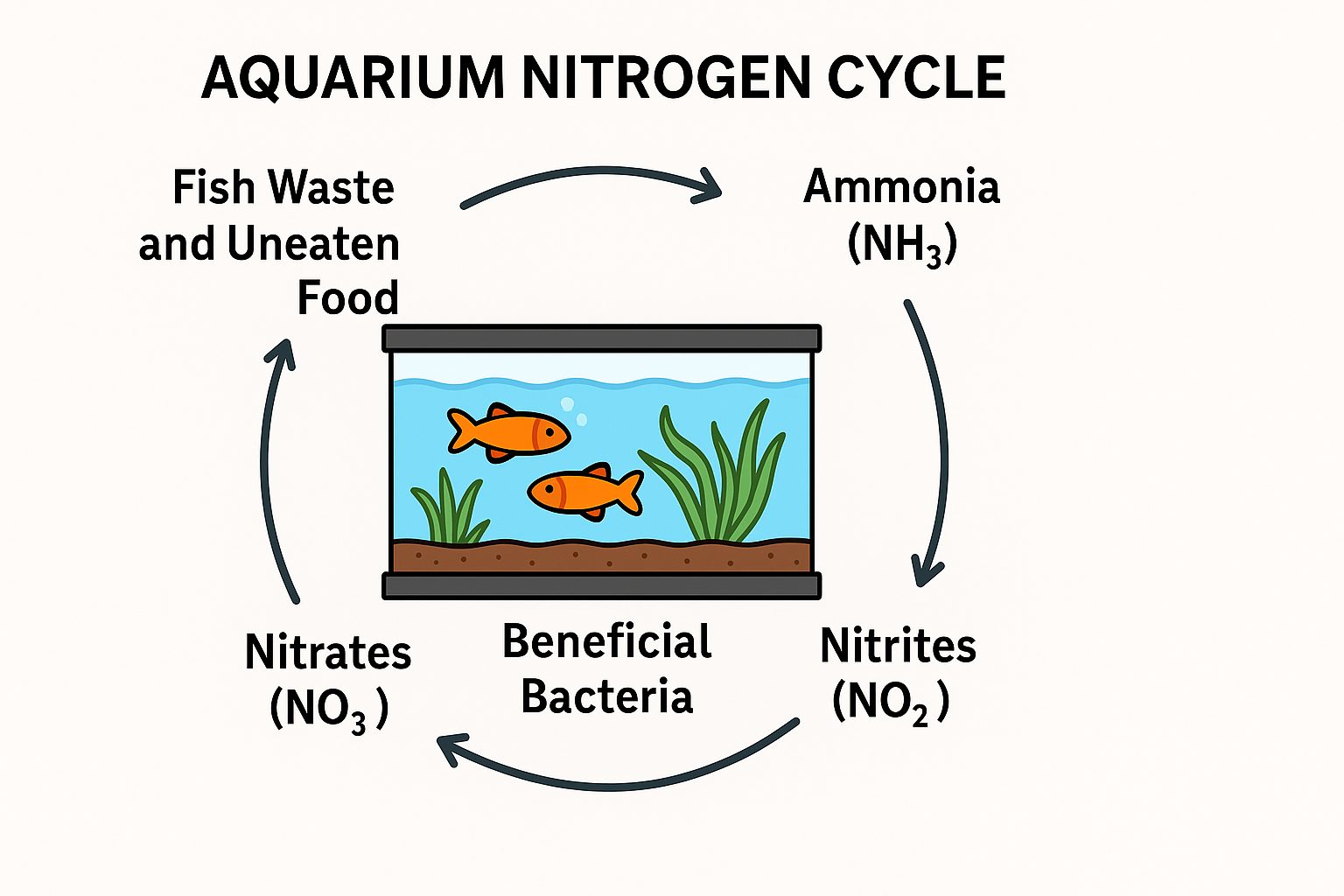
Cycling refers to establishing a biological filter in your aquarium that supports beneficial bacteria. These bacteria convert toxic waste (like ammonia from fish poop and food) into less harmful substances.
This process is known as the nitrogen cycle, and it has three main stages:
- Ammonia (NH₃) is produced from fish waste or decaying food.
- Nitrite (NO₂⁻) forms as bacteria begin breaking down ammonia.
- Nitrate (NO₃⁻) forms when a second group of bacteria convert nitrites. Nitrate is much less toxic and can be managed with water changes or plants.
🐟 Why Cycling Matters
Without a properly cycled tank, ammonia and nitrites build up quickly and can kill your fish. Cycling keeps your water safe and stable, giving your fish a long, healthy life.
🧰 3 Ways to Cycle Your Aquarium
1. Fishless Cycling (Recommended)
This is the safest and most humane method.
- Set up your tank (filter, heater, substrate, decorations).
- Add pure ammonia or fish food daily to simulate waste.
- Test the water every few days using a test kit.
- You’ll see ammonia spike, then nitrites, then nitrates.
- Once ammonia and nitrites are both at 0 ppm, and nitrates are present, your tank is cycled.
Timeframe: 4–6 weeks
2. Fish-In Cycling (Not Ideal for Beginners)
This method involves adding a small number of hardy fish early on. It’s risky unless you're experienced.
- Add 1–2 hardy fish in a large tank.
- Test water every 1–2 days.
- Do frequent water changes to keep ammonia/nitrite levels low.
- Add beneficial bacteria to speed up the process.
3. Using Pre-Cycled Media
If you have access to a healthy, established tank:
- Borrow filter media, gravel, or decorations from that tank.
- Place them into your new setup.
- Add a small bioload and monitor parameters—cycling is much faster.
🧪 Tools You’ll Need
- Liquid test kit (for ammonia, nitrite, nitrate)
- Ammonia source (pure ammonia or fish food)
- Water conditioner
- Filter and heater
- Patience 🕰️
🌱 Cycling Tips for Success
- Keep the temperature around 77–82°F to boost bacteria growth.
- Use a bacteria starter like Seachem Stability or FritzZyme 7 to speed things up.
- Don’t clean or replace filter media during cycling.
- Perform small water changes only if ammonia exceeds safe levels (over 4 ppm).
✅ Signs Your Tank Is Fully Cycled
- Ammonia: 0 ppm
- Nitrite: 0 ppm
- Nitrate: 20–40 ppm
- No bad odors
- Clear water
- Healthy bacteria established in your filter
🐠 After Cycling: Add Fish Slowly
Once your tank is cycled, add fish gradually to avoid overwhelming your bacteria. Start with a few, then wait a week or two before adding more.
By taking the time to properly cycle your aquarium, you’re giving your fish a safe and healthy home right from the start. Happy fishkeeping! 🐟💧
Have more questions?
Ask TankBuddy!
Recent Posts
Stay Updated
Subscribe to our newsletter for the latest tank tips and updates.